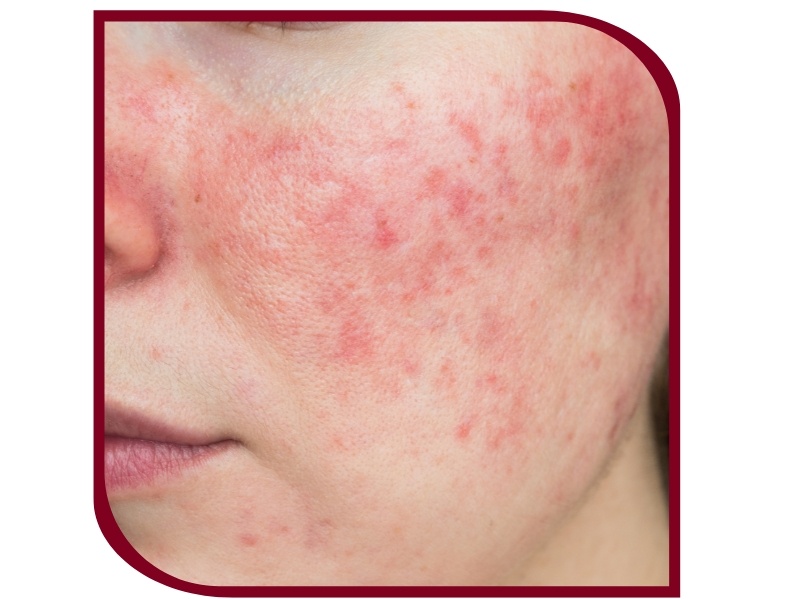
COUPEROSE AND ROSACEA

Rosacea is a common chronic skin condition that often manifests as redness on the face and pimples. It is an inflammatory disease of the skin on the face, one of the signs of which is rosacea (permanent presence of small visible blood vessels).


Rosacea is characterized by redness, rosacea, and sometimes lesions that may resemble acne (papules and pustules). Dryness of the eyes is also observed. Less commonly, thickening of the skin may be present with deformity of the tip of the nose.

There are treatments available to relieve symptoms of rosacea, mostly topical: gels and creams, but also treatment with Lasers and IPL (intense pulsed light) to make the redness disappear. In some cases, a long-term antibiotic treatment may also be prescribed.
 

Rosacea mostly affects women (twice as often as men) with a peak frequency around menopause. Adults, mostly in their forties and fifties. People with fair skin, hair, and blue eyes are more likely to be affected by this condition. Additionally, those who work in front of heat sources seem to be at a higher risk.​

couperose

ROSACEA SYMPTOMS

Rosacea has many characteristics.

Sufferers may present with one or a combination of these characteristics.

ROSACEA FORMS

There are 4 types of rosacea: erythematotelangiectatic (type 1), papulopustular (type 2), hypertrophic (type 3) and ocular (type 4).

ROSACEA EVOLUTION

Rosacea symptoms, particularly papules and pustules, can be triggered by a variety of factors.

The causes of rosacea are poorly understood. Doctors believe it is a multifactorial disease, involving both genetic factors and environmental factors. The most commonly accepted hypothesis to explain this chronic inflammatory disease of small blood vessels is an abnormal stimulation of the skin’s immune system.


This stimulation leads to a disruption of the mechanisms that control the diameter of these small vessels, causing them to dilate temporarily or permanently, making them visible. The presence of bumps (papules and pustules) in rosacea may be aggravated by the presence of a parasitic mite in the sebaceous glands: Demodex folliculorum, which itself carries a bacteria, Bacillus oleronius, which may be involved in the formation of pustules.

Some simple measures can help reduce the symptoms of rosacea, as well as the frequency and intensity of flare-ups.
 

  • Apply a protective lotion with an SPF of at least 30 to your face.
  • Do not use topical corticosteroid treatments for extended periods of time or without medical supervision.
  • Practice gentle cleansing and regularly moisturize the skin on your face with a light lotion.
  • Avoid oily foundations.
  • Protect your face from the cold.
  • Avoid intense exercise sessions.
  • Avoid consuming alcoholic beverages.
  • Some foods seem to trigger rosacea flare-ups. These include: chocolate, vanilla, dairy products, cheese, liver, vinegar, soy sauce, tomatoes, eggplants, spinach, peas, beans, avocado, banana, citrus fruits, grapes, plums, figs, spices, etc.

The superficial layer of the skin constitutes a natural barrier that helps prevent irritation and infections (repels bacteria and dirt) while retaining moisture. The protective barrier of the skin may be compromised in people with rosacea, which would explain why they often have very sensitive skin that easily becomes irritated (burning sensation, itching, redness) and tends to be dry.

Good daily skin care can help restore the protective properties of the skin barrier to minimize irritation and redness.
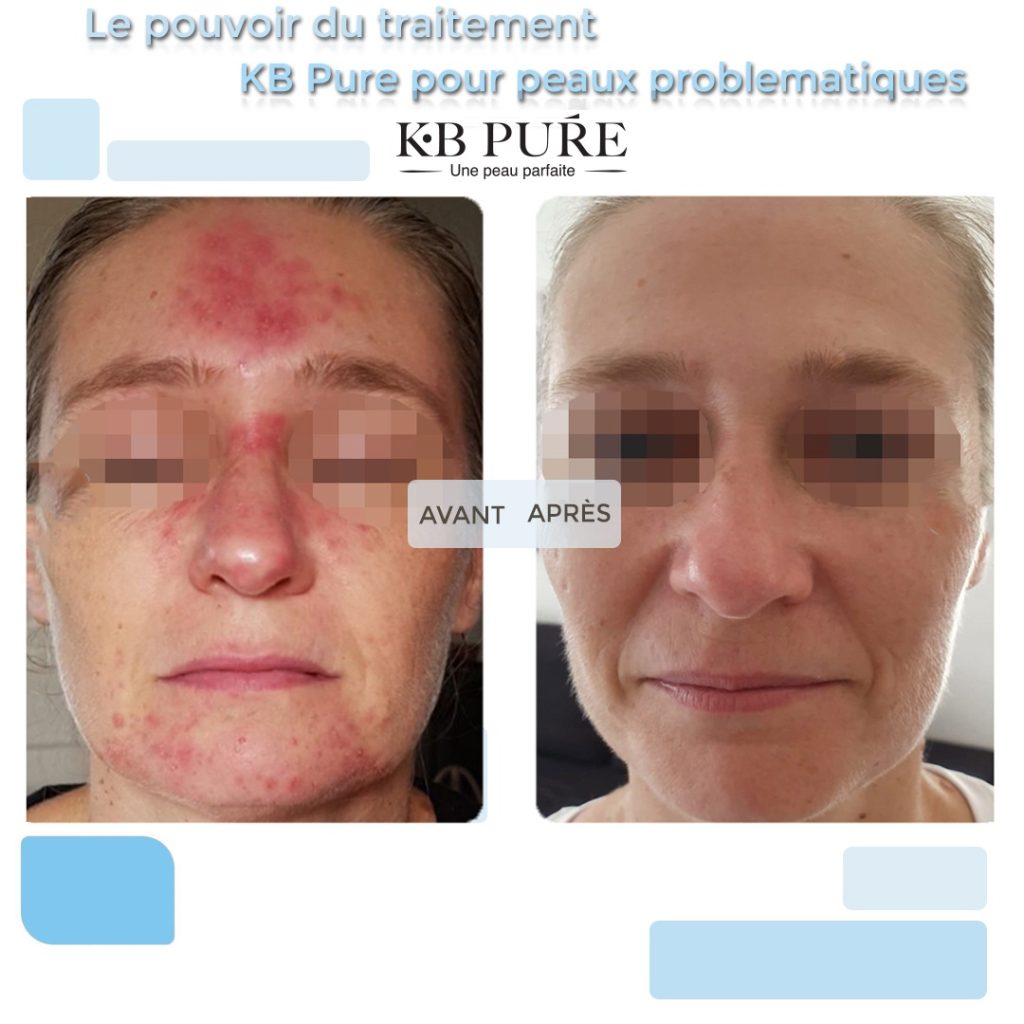
traitement

FOR PEOPLE SUFFERING FROM A PAPULO-PUSTULAR FORM OF ROSACEA

They must be particularly vigilant in terms of facial hygiene: gentle cleansing products, non-greasy and non-comedogenic; cleansing the face morning and evening followed by moisturizing the skin. Sunscreens are an important element of skin care for people with rosacea.


Sun rays are not only a triggering factor for rosacea flare-ups, but ultraviolet (UV) rays can also damage the skin by causing sunburns and, over time, wrinkles, spots, and even skin cancer. Use sunscreen regularly to help protect the skin from sun rays and limit rosacea flare-ups.
RECOMMENDED TREATMENTS

RECOMMENDED PRODUCTS

Receive regular advice, treatment suggestions, and news and promotions from the clinic.

* Required field(s). We collect this data to process your request in accordance with the Privacy Policy, which can be found here: Privacy Policy. You have the right to access, rectify, provide instructions regarding the management of your data after your death, and transfer your data, and, for legitimate reasons, to request its erasure, restriction of processing, and to object to its processing. You can exercise these rights by contacting us here: Privacy Policy.

Any appointment cancellation made less than 24 hours in advance will incur a cancellation fee equal to 50% of the cost of the reserved services, and the full cost of the reserved services in the event of a no-show. If you need to cancel or modify your booking, please contact our team to discuss your options.

    * Required field. We collect this data to process your request in accordance with our Privacy Policy, which can be found here: Privacy Policy. You have the right to access, rectify, provide instructions regarding the management of your data after your death, and request its portability. For legitimate reasons, you also have the right to erasure, restriction of processing, and objection to the processing of your personal data. To exercise these rights, please contact us here: Privacy Policy.

    SYMPTOMS OF ROSACEA:

    Rosacea has many characteristics. People with rosacea may experience only one of these characteristics or a combination of them.

    – Persistent redness on the cheeks, nose, chin, or forehead is a hallmark of rosacea. This symptom alone allows doctors to diagnose the condition. People with fair skin also often have a history of flushing and redness.

    – Thickening of the skin on the nose, ears, or chin is a hallmark of rosacea. This symptom alone allows doctors to diagnose the condition. The skin may appear swollen, bumpy, and red, and the nose may appear bulbous.

    – Red, inflamed bumps and pimples (papules and pustules) on the cheeks, chin, or forehead are a common sign of rosacea. This symptom of rosacea is often mistaken for adult acne.

    – Tiny blood vessels visible on the cheeks and nose are a common sign of rosacea.

    – Intense and prolonged hot flashes (lasting from 10 minutes to over an hour) during which the skin burns or stings are a common symptom of rosacea. These hot flashes can occur within seconds.

    – The affected person has red, irritated eyes and a gritty feeling. Their eyelids may also become red and crusty. In severe cases, potentially serious eye conditions can develop.

    – The skin may burn or sting.

    – The face may be swollen during or after hot flashes. The skin may feel rough, dry, and flaky.

    THE FORMS OF ROSACEA:

    Erythematous-telangiectatic (type 1):

    This most common form of rosacea is characterized by redness (“erythema”) located primarily on the central part of the face (cheeks, nose, excluding the areas around the mouth and eyes, and sometimes the scalp in cases of baldness). This redness can be transient (with a sensation of hot flashes or “flushing”) or permanent: these are known as “telangiectasia” or “couperose.”

    Papulo-pustular (type 2):

    In this form of rosacea, papules or pustules (small bumps) are present on the central part of the face. This form was formerly called “acne rosacea” because it can resemble juvenile acne. However, this term has been abandoned because it is not acne: there are no comedones (blackheads) or pustule scars as seen in acne. This form is often accompanied by tingling or burning sensations on the facial skin.

    Hypertrophic (type 3):

    This form of rosacea is characterized by a thickening of the skin in the affected areas (the “phyma”) with persistent redness: nose, cheeks, eyebrows, chin, and ears. The sebaceous glands multiply, increase in size, and their openings become visible. This form is rarer (approximately 5% of rosacea cases) and is more commonly observed in men over 50, particularly on the nose (“rhinophyma”). Blood vessels are also permanently visible.

    Eyepiece (type 4):

    In 30 to 50% of cases, there is a form of rosacea that affects both eyes. The person complains of stinging, dryness, and itching of the eyes, excessive tearing, and even hypersensitivity to light. Blood vessels may become permanently visible on the eyelids. This form of rosacea can precede facial redness by several years.

    There is also a very rare form of rosacea: rosacea fulminans. This exceptional form of rosacea appears in women between 30 and 40 years old, sometimes linked to pregnancy, Crohn’s disease, or treatment with interferon alfa (an immunostimulating drug). Numerous pustules appear. They are painful and have a significant cosmetic impact.

    HOW DOES ROSACEA PROGRESSE

    The symptoms of rosacea, particularly papules and pustules, can be
    triggered by various factors. For example:

    • Exposure to the sun, cold, and wind.
    • Consuming hot drinks, alcoholic beverages, or spices.
    • Engaging in intense physical activity.
    • Fever.
    • Stress and emotions.
    • Sudden changes in temperature.
    • Hot baths, saunas, steam rooms, etc.
    • The progression of rosacea over the years is quite unpredictable. In general, it
      tends to lessen with age.

    Les symptômes de la rosacée, en particulier les papules et les pustules, peuvent être
    déclenchées par divers facteurs. Par exemple :

    • L’exposition au soleil, au froid, au vent.
    • La consommation de boissons chaudes, de boissons alcoolisées ou d’épices.
    • La pratique d’un sport de manière intense.
    • La fièvre.
    • Le stress et les émotions.
    • Les changements soudains de température.
    • Les bains chauds, saunas, hammams, etc.

    L’évolution de la rosacée au cours des années est assez imprévisible. En général, elle
    tend à s’atténuer avec l’âge.

    Black Friday Esthétique Evasion, du 24 au 27 novembre 2026 : taxes payées sur les soins du visage et les produits de soins, rabais laser de 20 %, offres en salon uniquement.

    Offres valides en salon seulement. Du 24 au 27 novembre 2026 inclusivement. Certaines conditions s’appliquent.